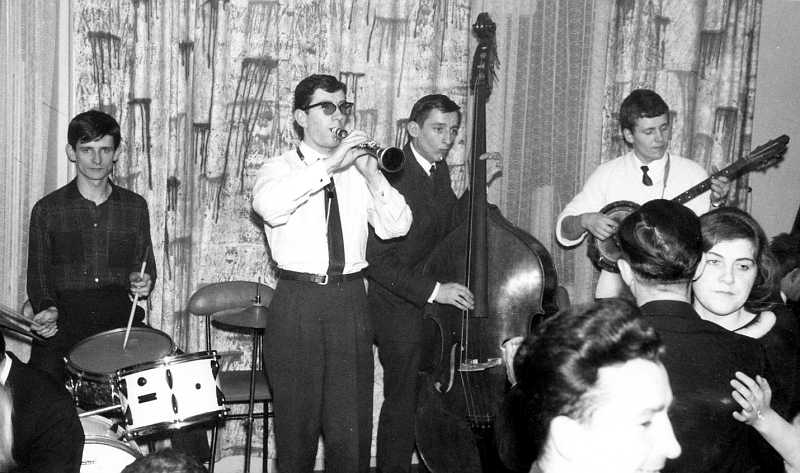
In the common room of Nowa Huta's Secondary School No. XII (Słoneczne estate), for almost two years already,
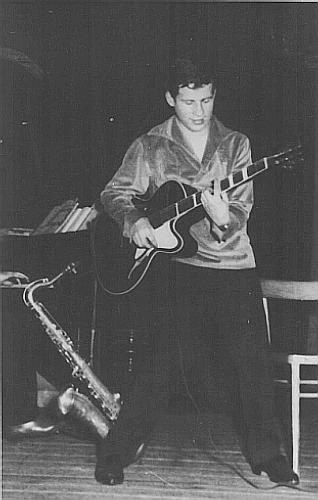
Jerzy Ochoński , playing the clarinet and later the tenor
saxophone, together with the boys -
Zygmunt Schornstein, Andrzej Kunz, Witek Robotycki,
myself and others - had been playing Dixieland. Jazz was the passion of
Jurek Ochoński, and
his dream was the classic line-up: trumpet, trombone,
clarinet + rhythm section. There were rehearsals, performances,
and also a great deal of laughter. It has to be said that
the playing got better and better, until the breakthrough year of 1960 came.
At that time in Kraków
Janusz Gajec (guit. voc.) and
Jerzy Świerczek (p) dreamed of creating a rock
band (a big-beat band, as people said then).
They lacked an instrumental soloist. They invited
Jurek Ochoński and talked him into the new music. At last they began
rehearsing together, and after some time others began to turn
up:
Zdzisław Zięciak (b),
Jan Kowalczyk (bg),
Lesław Trojanowski (lg),
and
Wiesława Bator, gifted with a superb voice.
Slowly the same music began to appear in the common room
of our own school. There the guitar was already played by
Zygmunt Schornstein, and after some time I began to master the drums
.
Jurek Ochoński , without saying a word, was giving
guitar lessons at home to
Piotr Pałamar.
It went better and better, and the group began to show up "in town" more and more often.
Around the spring of 1961 a mysterious manager began to appear around the band
(a student -
Jan Grudziński), who finally
offered to work with us (care, organisation, arranging gigs, etc.). He had ideas and more time.
Soon he and
Jurek Ochoński went to the
"Wisła" sports club in
Kraków for a talk.
After some hard bargaining it was agreed:
- the club will provide microphones, guitar amplifiers and the whole
sound system, make a room available for the band's rehearsals, and dress
the boys in matching outfits,
- the band will play a set number of evenings free of charge
in the club hall, and on its shirts will wear the club emblem,
that is, the white star ("biała gwiazda").
Jurek Ochoński (out of courtesy, together with the manager) settled
the line-up,
and so the following went for a tailor's fitting at the Dąbrowski Cooperative
on Wiślna Street:
Andrzej Kunz (p),
Lesław Trojanowski
(lg),
Zygmunt Schornstein (g),
Piotr Pałamar (bg),
Wacław
Kraszewski (dr) and the leader
Jerzy Ochoński (ts). In this way
Jurek Ochoński brought to life the band
Biała Gwiazda.
Before long we received, made to measure:
black trousers + a gold shirt with black cuffs and a black collar;
Jurek Ochoński (the leader)
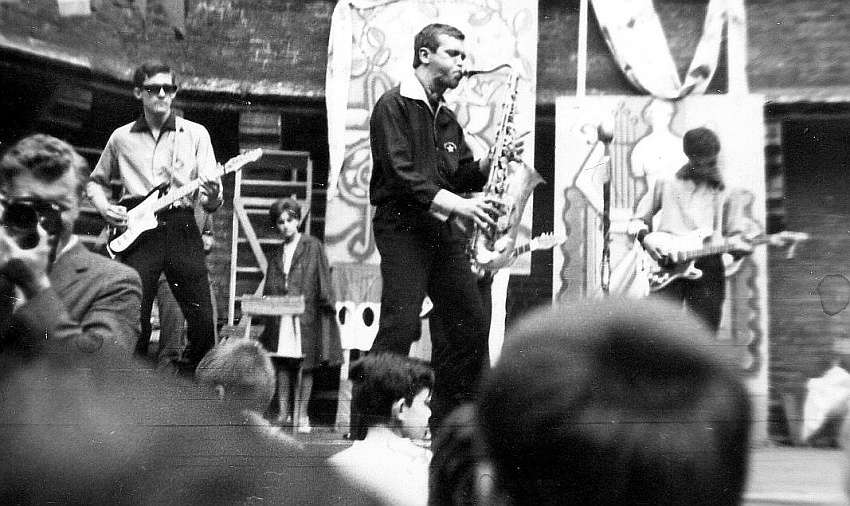
had the colours reversed - a black shirt with gold cuffs and a gold collar - so that on his shirt the white star embroidered
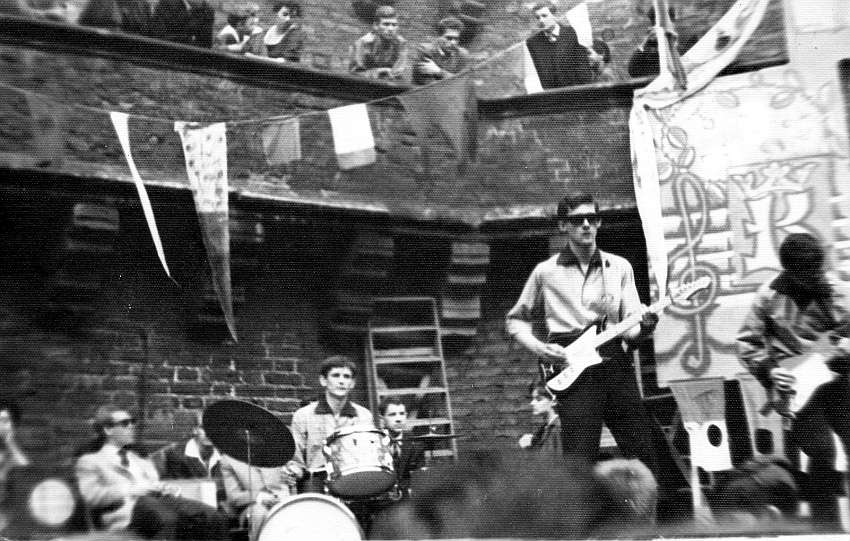
on the left breast, with the name embroidered in an arc above it, stood out most clearly (see the photos).
This is what it looked like, and this, almost to the very end, was
the line-up of the first big-beat band in the history of Nowa Huta, the band
Biała Gwiazda .
For the only major change that occurred
took place in July 1963.
When I left for Szczecin for good, the place behind the drums was taken by
Mietek Spyrczyński.
While the band was active, in
the years 1961-1963, it worked with excellent
singers:
Wiesława Bator, Elżbieta Żakowicz, Włodzimierz Gurgul
Intensive rehearsals began in the café room of
"Wisła" , along with dance evenings for young people.
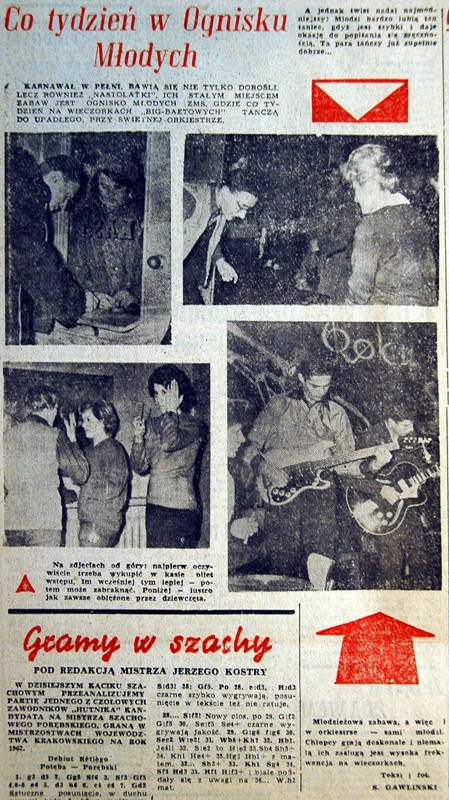
In Nowa Huta the band played above all at the
"Violinka" club (also known as "Jedynka")
on the Młodości 1 estate, where it won enormous popularity. The following year it played
there in turn with
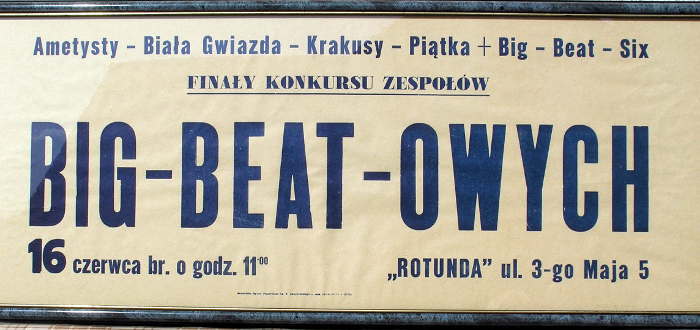
"Ametysty" .
A regular, almost half-year series of dances for young people was organised by
"Biała Gwiazda" in
the hall of the
Song and Dance Ensemble at the ZDK on the Górali estate, a hall that could hold
about 400 people. There it launched the
"open microphone" , which meant
that during the dance anyone could come forward and, accompanied by the band, sing
(or sometimes merely "perform") a song of their own. Of course there was no shortage of volunteers.
Understandably, some "performers" won applause, while others caused general merriment.
The band was invited to play at dance evenings in a great many secondary schools of Kraków.
On the wave of its popularity the band "served" events at the House of Culture on Krowoderska Street,
at the
"Pinokio" club in Bronowice and at the
"Olimpijka" café (in a building that no longer
exists). Finally, by special invitation, it also performed in Łódź, at the student
club
"Pod Siódemkami" at 77 Piotrkowska Street.
Obviously the idol of all the young people of the time,
Elvis , had to be reflected
in the band's repertoire, in the form of instrumental versions of several of his famous
rock and roll numbers. Besides these, a number of evergreens such as
"Charmaine" or
"Perfidia"
and others. The latest hits were a must, such as
"Speedy Gonzales"
by
Pat Boone or
"Let's Twist Again" by
Chubby Checker.
But the ambitions of
Jurek Ochoński
reached further, which is why he prepared "beat" arrangements even of songs such as
the famous
"Starzyk" of the
"Śląsk" Song and Dance Ensemble (it really won admiration).
The need for such ideas of our own, more careful arrangements and better
performance also came from the preparations for the announced, multi-stage
Contest of Kraków Big-Beat Bands. We had to perform something that would be
a clear accent of our own. Besides
"Starzyk", mentioned above, this was also
the famous
"Tequila", whose performance, with changing rhythm and tempo and almost
choreographic elements, always set off a burst of enthusiasm.
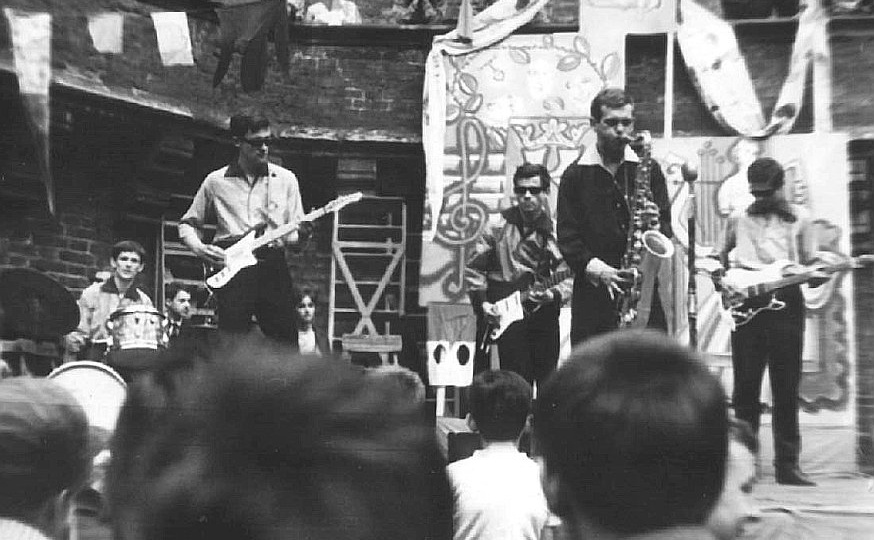
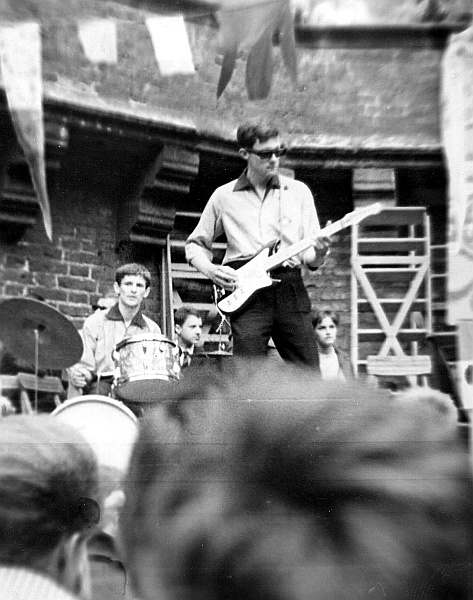
A great success of the band was its performance in the Barbican (among other bands)
at the Juwenalia student festival in 1963 (see the photos).
In the early autumn of that year the band ended its activity. Some of the musicians
took up studies, others developed their performing skills in the colours of other groups.
Read more about the beginnings of Biała Gwiazda ..




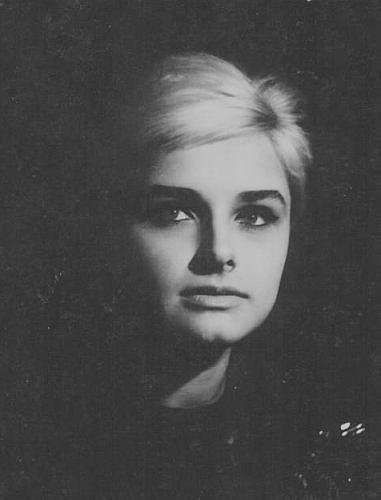



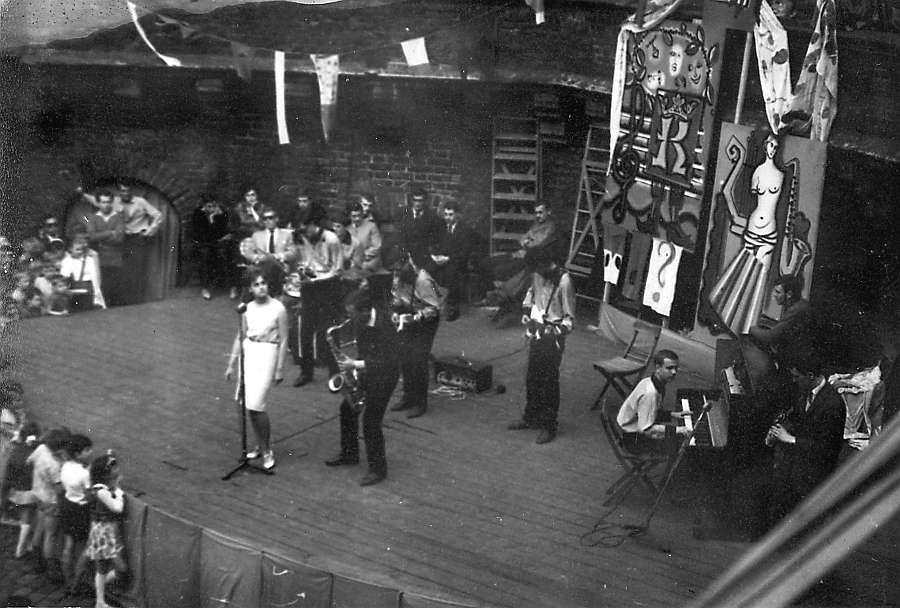

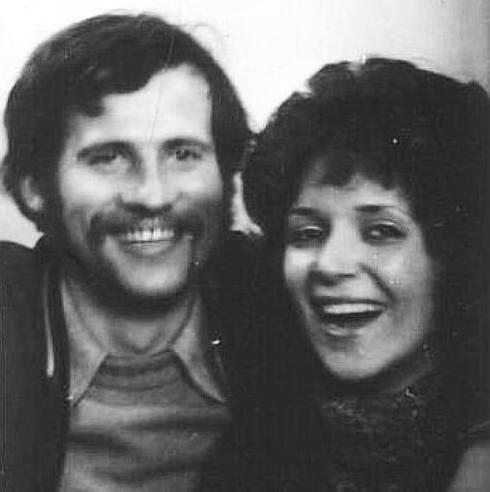
 Wiesława Bator, our Brenda Lee.. - a singer who worked with the band for a long time
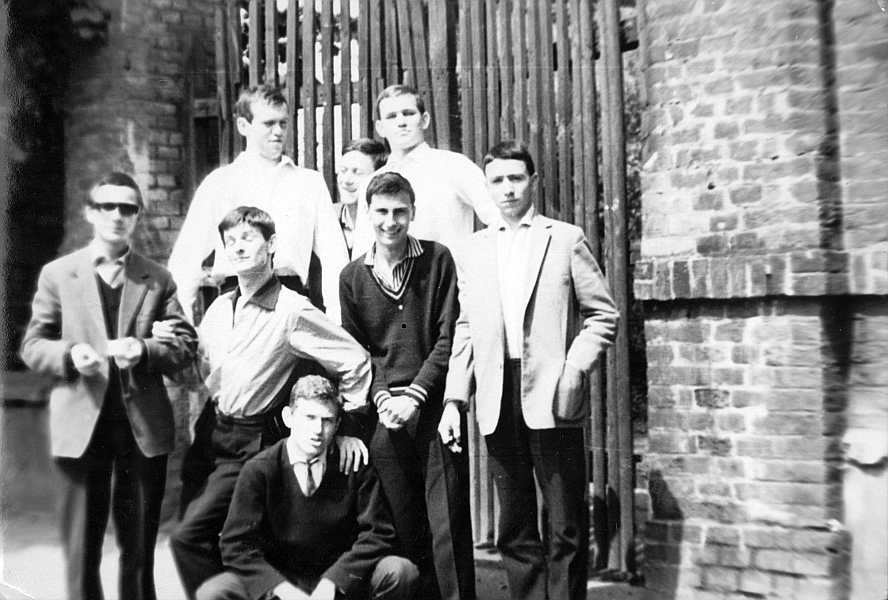
Biała Gwiazda - relaxing ....
see..