
ab ovo 1966
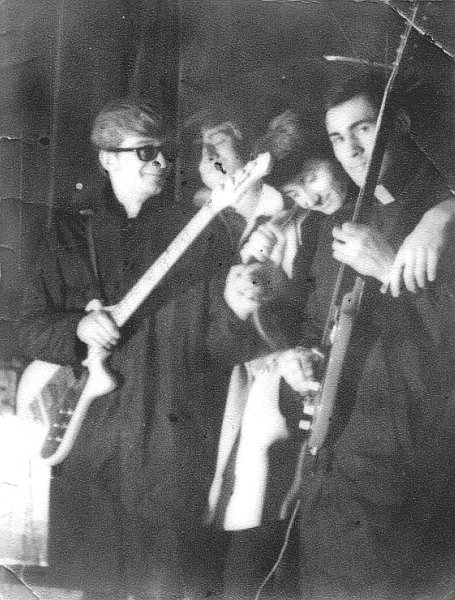 The band
Wawele ("The Wawels") was formed in 1966. It was started
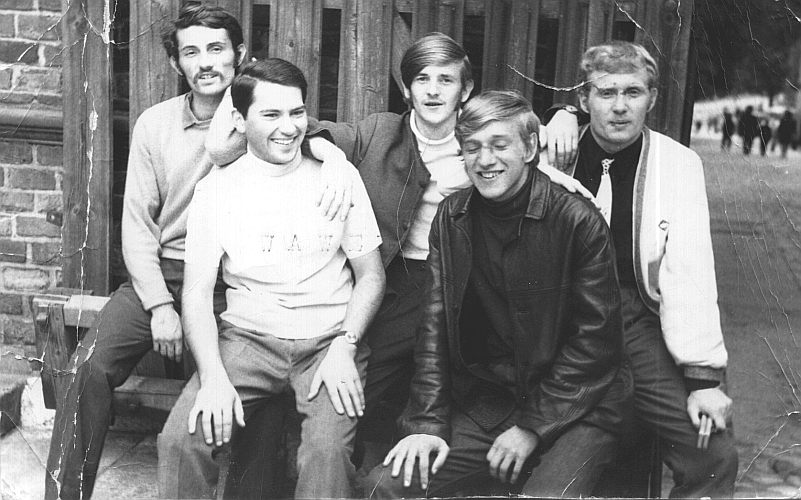
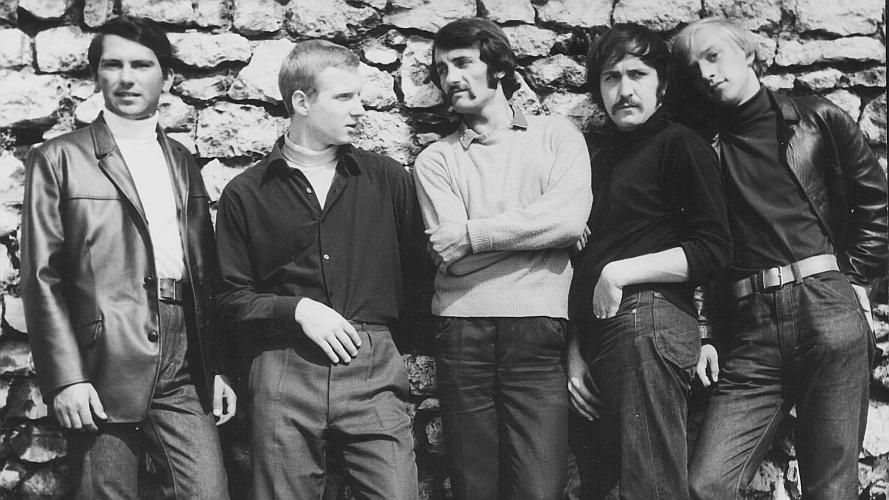
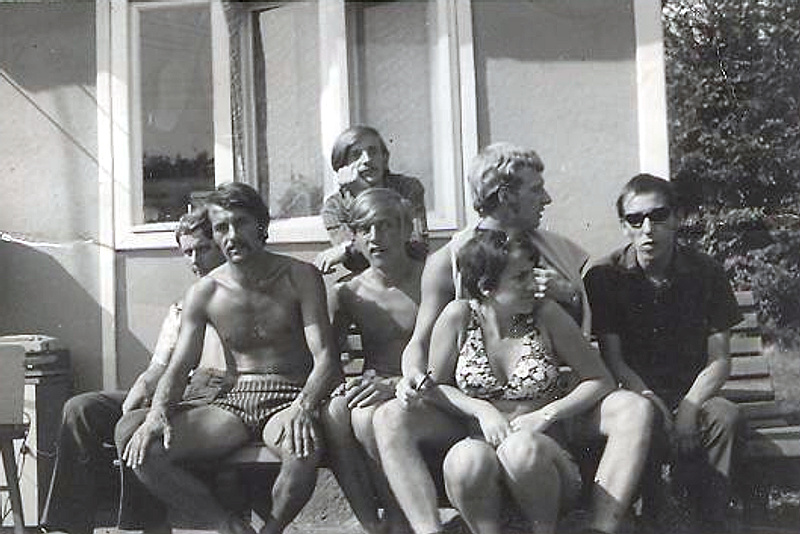
by Leszek Palca-Palczyński - vocals. The photo alongside shows the line-up:
Janusz Mamczarczyk - bass guitar,
Lesław Palca - vocals,
Krzysztof Marjański - guitar, vocals,
Janusz Czarnecki - guitar,
Andrzej Puszkarzewicz (not in the
photo) - drums.
At first rehearsals were held at the
Kraków Household Goods Works on Lwowska Street, later - at the suggestion of
Marek Oleś -
at a branch of the WAWEL confectionery works (ZPC) at 2 Kącik Street.
Having started his studies, Krzysztof Marjański left the band, and two musicians from the above line-up, Lesław Palca and Andrzej Puszkarzewicz, carried on making music, starting the whole line of later line-ups and successes of Wawele.
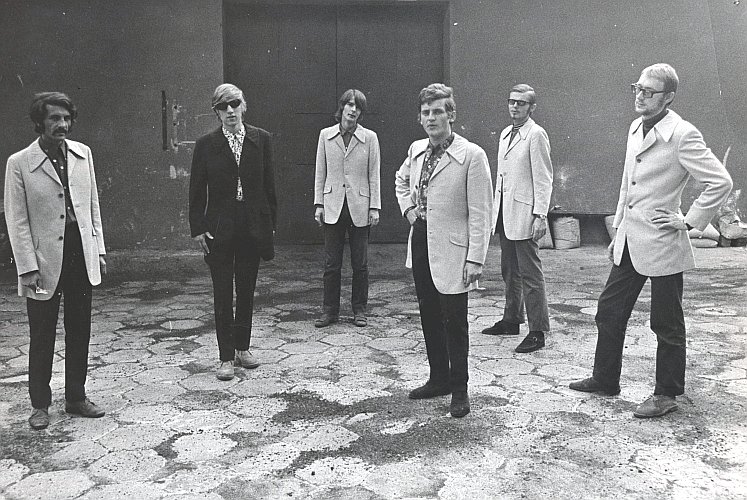
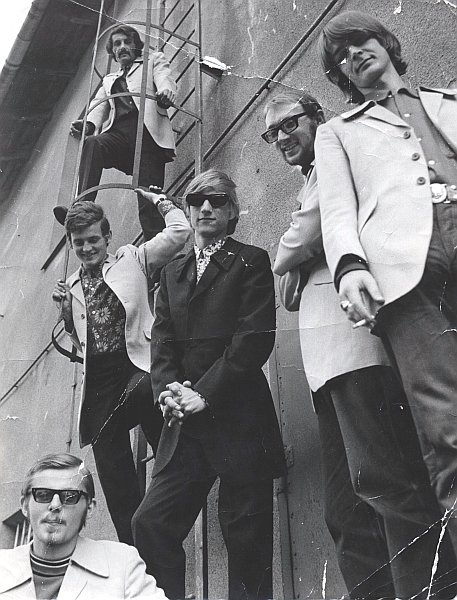
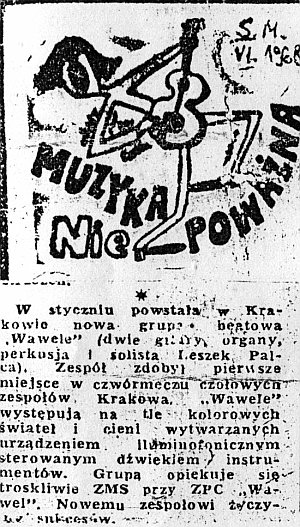
The band came together in the summer of 1967, and its patron became the Wawel Confectionery Works in Kraków. It is from ZPC "WAWEL" that the band took its name. The composer and arranger was Edward Krzynówek. The repertoire included 8 original compositions. At that time the band won almost every music contest.
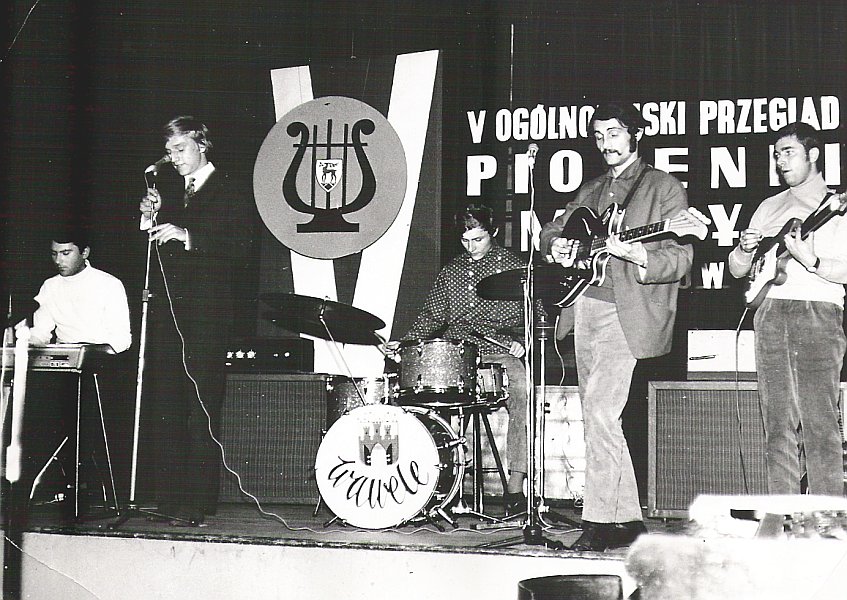
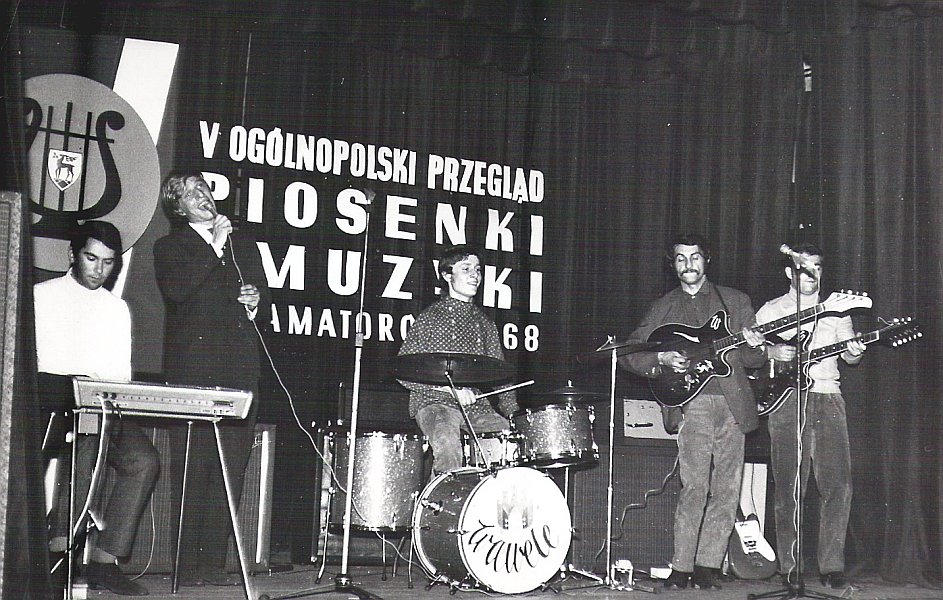
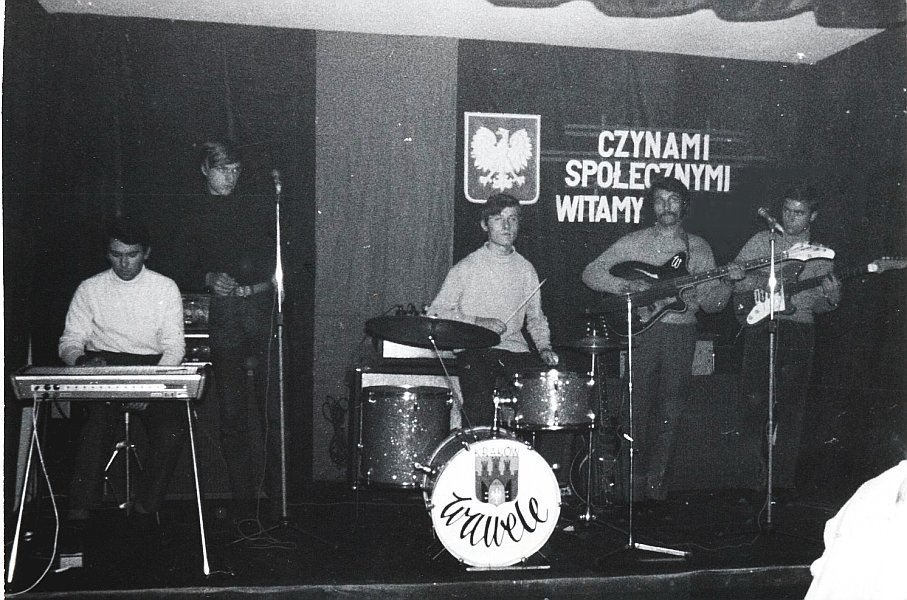
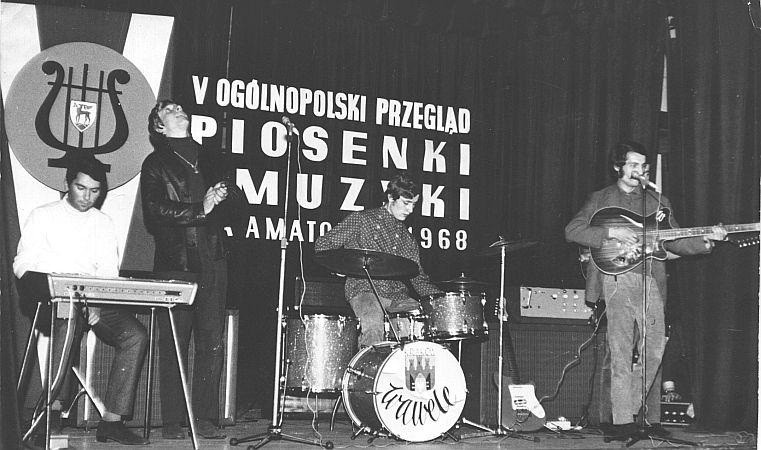
An important performance took place in April 1968 at a four-way contest of Kraków beat bands, in which Wawele took first place and which also featured the bands Telstar, Rytmy and Czarne Perły. Another important appearance was at the National Review of Song and Music in Jelenia Góra in 1968 (photos below), alongside Elżbieta Igras and Jacek Lech.
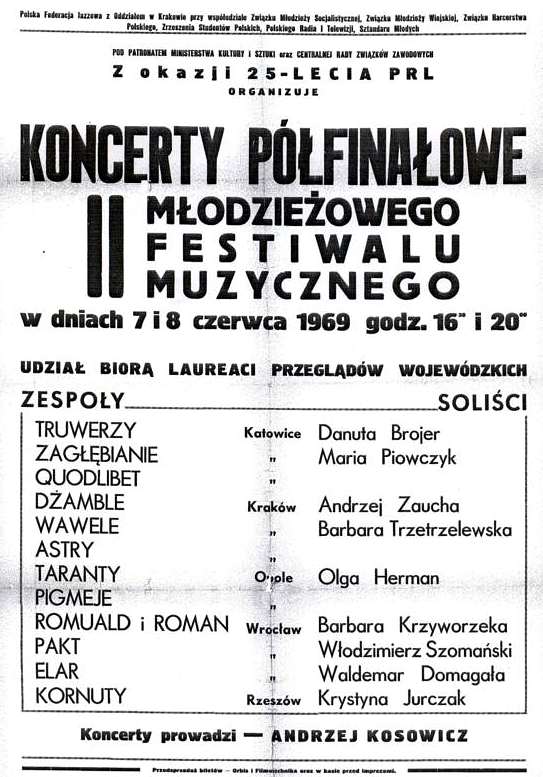
At the Silesian Stadium in Chorzów, before almost 40,000 spectators, Wawele appeared alongside, among others, Breakout with Mira Kubasińska, Tadeusz Nalepa and Włodzimierz Nahorny, the band ABC led by Andrzej Nebeski, with Halina Frąckowiak, the Czech band Flamengo, the group Hard Road with the Dutch singer Mariolaine and Michał Muzolf - bass guitar (ex Breakout), and the winners of the 2nd MFM (Youth Music Festival).
The day after the Silesian Stadium concert, on 21 July 1969, the band appeared on TVP Katowice with the contest winners, among them the band Dżamble, Barbarą Trzetrzelewską, Waldemarem Koconiem... In 1969 the band took part in and won the Tarnów Month of Youth Music. It also took part in the 1st Inter-Voivodeship Review of Amateur Youth Vocal and Music Groups in Sanok and in the 7th KFPP (National Festival of Polish Song) in Opole. In spring 1969 the group reached the national final, changing its line-up for the occasion.
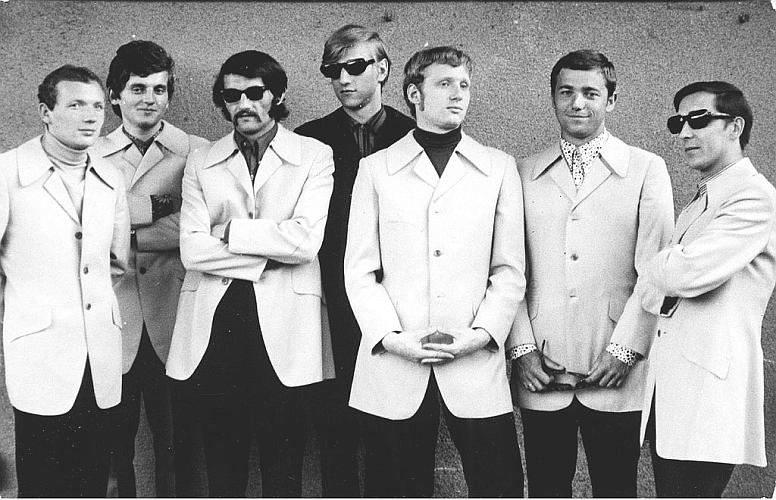
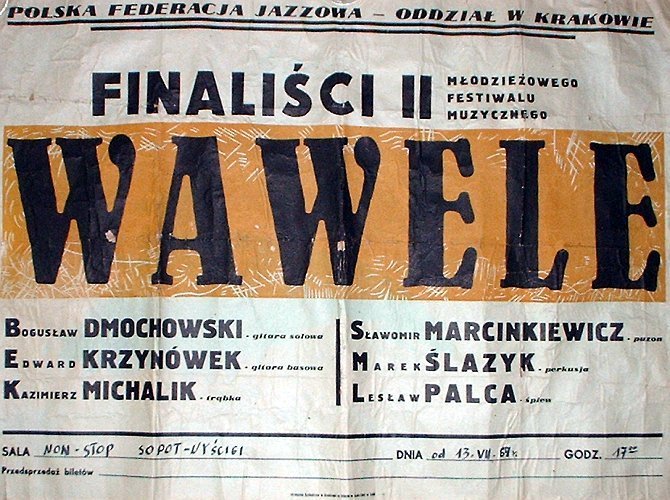
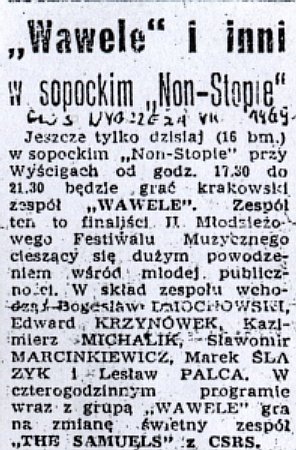
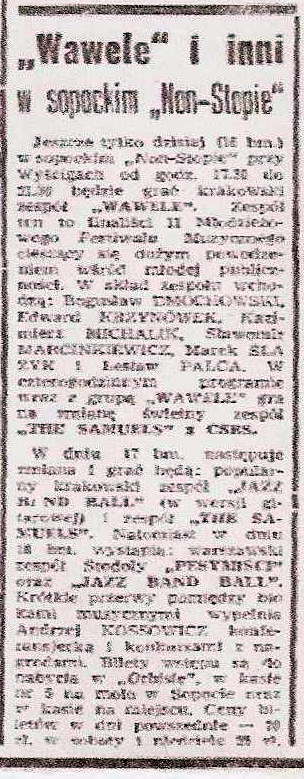
After the final and taking first place, the group toured Poland together with another group - Romuald i Roman - and for a week played at the legendary Non Stop club in Sopot. The line-up at the time was: Bogusław Dmochowski, Edward Krzynówek, Lech Palca-Palczyński, Marek Ślazyk. Studio recordings were also made for radio in Warsaw and Katowice. In summer 1969, at Radio Warszawa on Myśliwiecka Street, the band gave an interview and also made 8 recordings (original compositions), with sound direction by Sławomir Pietrzykowski, composed by Edward Krzynówek, among them: "Ali Bej", "Gwiazdy nad Krakowem", "Krakowiak" - in a new arrangement - and an arrangement of the folk ditty "Powiesili kota". The recordings were first broadcast on 12 June 1969 on Polish Radio Programme III, in a broadcast by Sławomir Pietrzykowski. The broadcast was repeated many times afterwards. This material was erased under a protocol signed by the Director-in-Chief of Programme III, dated 16 September 1975.
In this golden period of success and popularity the group also played in most of Kraków's student clubs.
Line-up:
1966-1969
lead guitar - Janusz Czarnecki / Roman Siwek / Antoni Krupa / Andrzej Lorenz / Bogusław Dmochowski
rhythm guitar - Krzysztof Marjański / Stanisław Nogieć
bass guitar - Janusz Mamczarczyk / Aleksander Glik / Edward Krzynówek
trumpet - Kazimierz Michalik
trombone - Tadeusz Sikora / Sławomir Marcinkiewicz
piano - Andrzej Puszkarzewicz / Zbigniew Baranowski ("Renato Bertoli")
drums - Jan Jurewicz / Andrzej Puszkarzewicz / Jan Jurewicz / Marek Ślazyk
vocals - Lech Palca-Palczyński
band manager - Marek Oleś
1967 - 1968
Click to enlarge
1968-1969



Copyright © Ryszard Szczudlowski
2003 - 2026 Kraków
2003 - 2026 Kraków